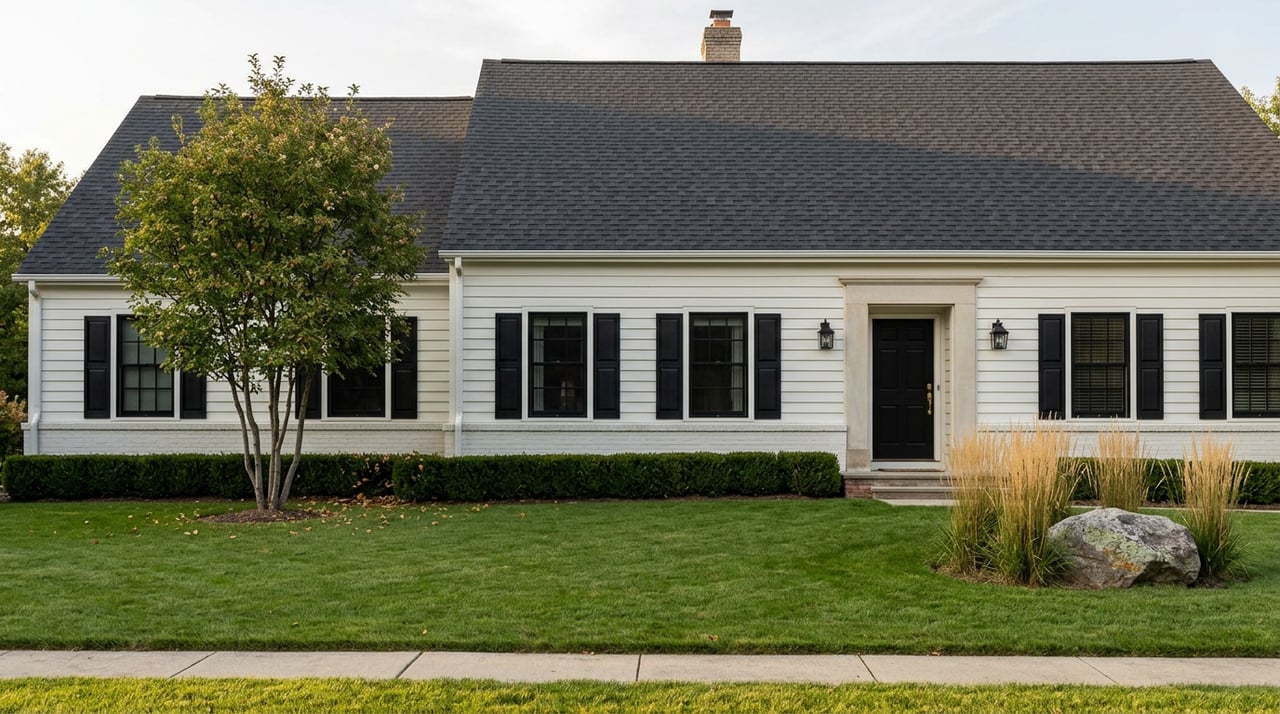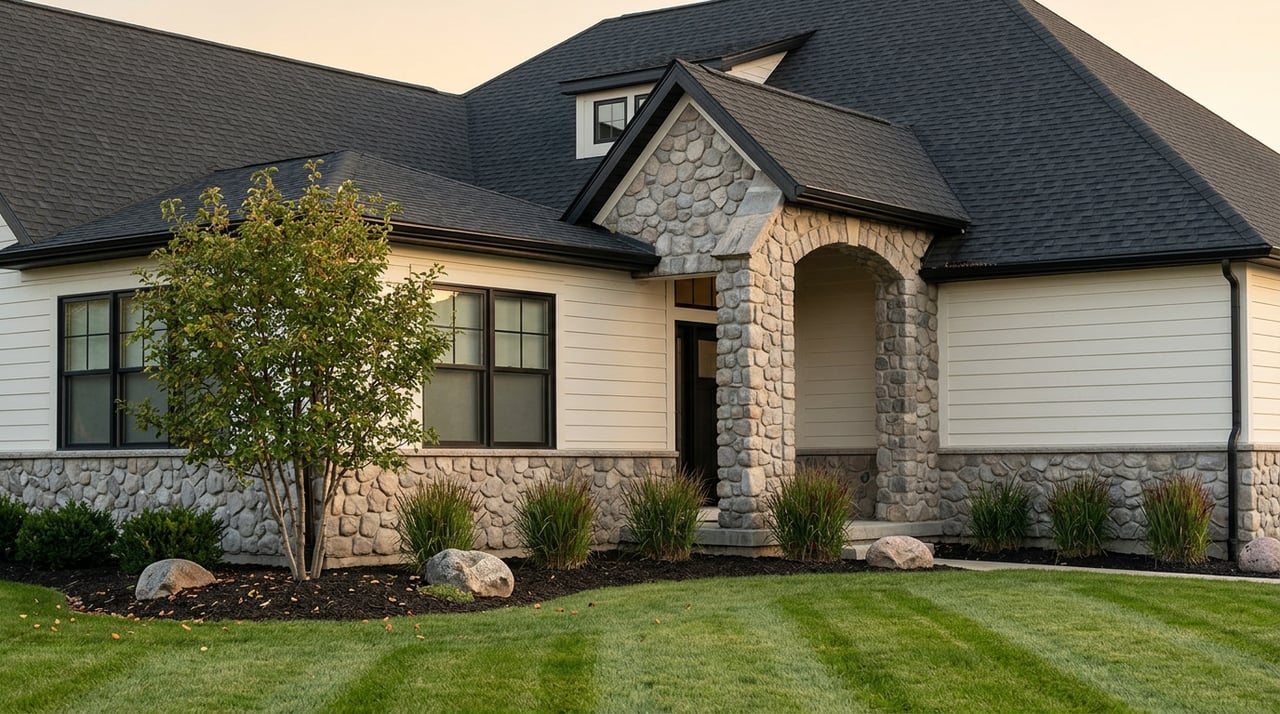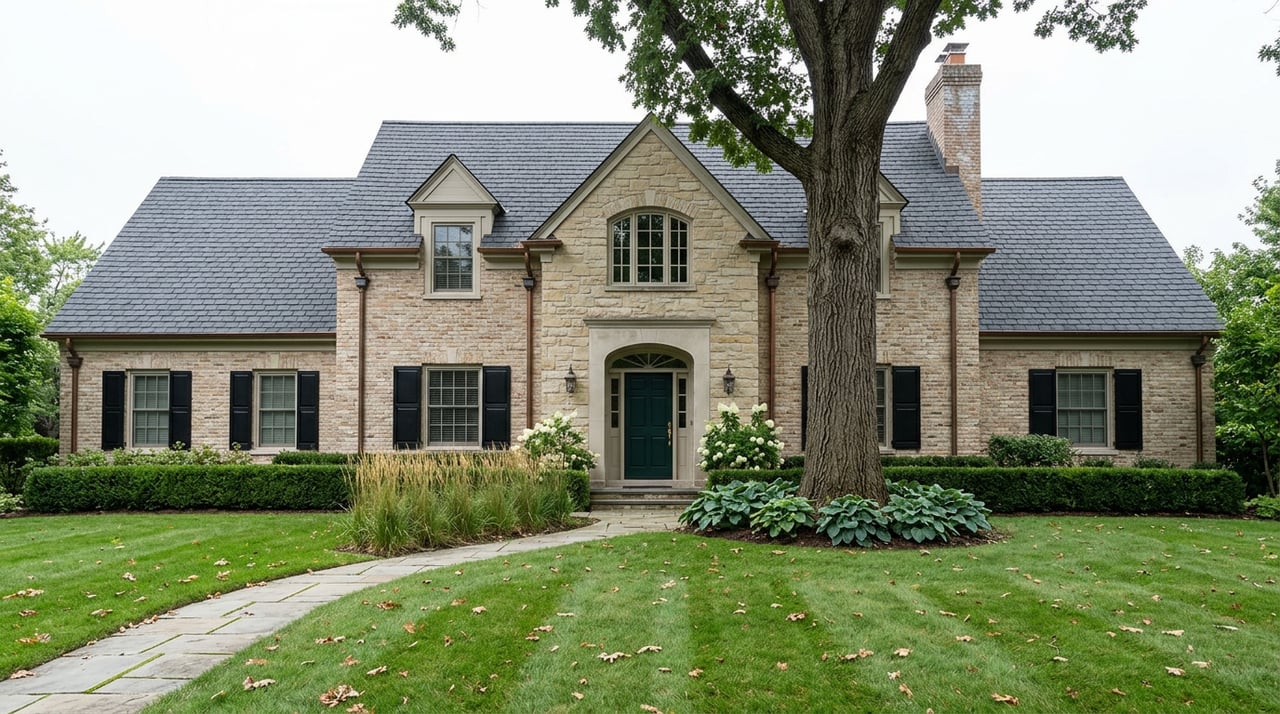
Cross Arden Avenue in Edina and you will not notice anything unusual at first. The trees are the same age. The lots are a similar size. But on one side of that boundary, a homeowner can apply for a permit, hire a crew, and replace an aging rambler with a new spec home in under a year. On the other side, inside the boundary of Edina's Country Club District, that same homeowner needs a Certificate of Appropriateness from the city, and in most cases the answer is no. The house has to stay.
That distinction rarely makes it into a listing description. It should, because it explains why two homes that both say "Edina" on the sign can represent completely different products, completely different price behavior, and completely different reasons to buy.
The ordinance nobody puts in the listing
The Country Club District was platted in 1924 by the Thorpe Brothers Realty Company, one of the first planned residential communities in Minnesota, and it was added to the National Register of Historic Places in 1980. The district covers roughly 14 blocks bounded by Minnehaha Creek, Sunnyside Road, Arden Avenue, and West 50th Street, encompassing about 555 homes, most built between 1924 and 1944 to the architectural standards Thorpe originally enforced through restrictive covenants.
Here is the part that actually matters for anyone comparing homes: any demolition, any new construction of a principal dwelling or detached garage, and any significant change to a street-facing facade inside that boundary requires a Certificate of Appropriateness from the city. The Plan of Treatment that governs this process is not a relic. The city council approved an update to it in 2024, effective January 1, 2026, and the revised version adds an escrow fee tied to project size, up to $15,000 for exterior work valued over $100,000, refunded once the work is completed to the approved plan. Routine repairs, interior work, and site features like fences or pools do not trigger the review. Facades, additions, and demolitions do.
In practice, this means a home in Country Club cannot simply be torn down because a buyer wants something newer. The applicant has to show the structure is not a heritage preservation resource in the first place. That is a high bar, and it shows in the numbers.
What a frozen supply does to price
Real estate portals treat "Edina" as one market with one median price, which is the first place the story goes wrong. Break it down by neighborhood and the picture splits.
Over the three months ending July 2026, homes in Country Club sold at a median of $1.8 million, up 17.6 percent compared to the same period the year before, with only 7 homes changing hands in July and the typical listing finding a buyer in 9 days, down from 6 days the year before. That is not a market cooling off. That is a market with almost nothing to sell, because the ordinance keeps existing houses from being replaced and there is no vacant land left to build on.
Compare that to Edina as a whole, where the citywide median sale price in February 2026 was $788,000, up 25 percent year over year, but on a sample of only 32 closed sales that month, down from 39 the year before. A city-level median built from that few transactions moves around for reasons that have nothing to do with underlying value. It moves because the mix of what happened to sell that month changed.
Country Club's scarcity is not incidental. It is the direct output of a rule that has been on the books since 2008 and was just reaffirmed for 2026.
Where the rebuilding actually happens
If Country Club is where the housing stock is frozen, the redevelopment activity has to go somewhere, and it goes next door. Builders working across Edina consistently point to Morningside, Arden Park, and parts of Parkwood Knolls as the neighborhoods where teardown and rebuild construction is concentrated, precisely because those areas combine older, smaller housing stock with buyer demand for larger footprints, without the historic-district review layer that governs Country Club.
Parkwood Knolls in particular has active new subdivision construction underway, with Carl M Hansen Companies still building out home sites in the neighborhood's West Ridge Farm section as of this year. That is a genuinely different kind of inventory than what a buyer finds inside the Country Club boundary a few blocks away. One is a fixed stock of century-old Tudor and Colonial Revival homes. The other is a live construction pipeline of new builds on similarly sized lots.
Rolling Green sits somewhere in between. It shares Country Club's reputation for large, established lots, but without the same legal restriction on demolition, so redevelopment there depends more on individual lot character and mature tree cover than on a blanket ordinance.
Why one neighborhood's median swings so hard
This is the part that catches buyers off guard when they start comparing numbers across neighborhoods instead of just across the city.
In March 2026, Morningside's median sale price was reported at $689,000, down 21.3 percent from the year before, on just 8 closed sales, compared to 3 sales in the same month the year prior. A neighborhood built out with a mix of 1930s bungalows and brand-new construction is going to produce a median that jumps around depending on which type of home happened to close that month. Sell three bungalows and one new build in the same 30 days, and the median tells you almost nothing about where prices are actually headed.
Country Club does not have that problem, not because its market is calmer in some abstract sense, but because there is only one type of product for sale there. A 1930s Tudor is what is on the market this year, and it was what was on the market five years ago, and it will be what is on the market five years from now, because the ordinance does not allow the mix to change.
That is the real lesson underneath the price data. A stable median in one Edina neighborhood and a volatile one in the neighborhood next door are not measuring different levels of buyer demand. They are measuring different degrees of freedom in what is legally allowed to exist there.
What this means if you are comparing neighborhoods
If you are looking at listings across Edina and trying to figure out why a home a few blocks from Country Club costs less, or why a Country Club listing seems to sell fast at a high number with very little to choose from, the ordinance is a big part of the answer, not the school district or the golf course.
Buying inside Country Club means buying a fixed, appreciating asset with a rulebook attached. Renovation, additions, and even garage replacements go through a formal city review process, and the escrow requirement effective this year adds a real cost to that process for larger exterior projects. It also means the home you buy is very unlikely to be torn down by a future neighbor, which is a form of protection some buyers value as much as the house itself.
Buying in Morningside, Arden Park, or Parkwood Knolls means buying into a market where the next lot over could become new construction within a year or two. That has upside if you are the one building, and it means the character of the block can shift house by house in a way Country Club's cannot.
Neither is the better choice in the abstract. They are different products wearing the same city name, and knowing which one you are actually looking at before you write an offer changes what questions you ask.
Frequently Asked Questions
Can any home in Country Club ever be torn down? Only if the applicant can demonstrate the property is not a heritage preservation resource or no longer contributes to the district's historic significance, which the city's Plan of Treatment treats as a high bar, not a routine exception.
Does the escrow fee apply to every project in the district? It applies to exterior work tied to a building permit, with the fee scaled to project valuation under the update the city council approved for 2026. Interior work, in-kind repairs, and site features like fences do not trigger the fee or the Certificate of Appropriateness process.
Are Morningside and Arden Park still considered part of Edina's most desirable areas? Yes. Builders and city data both point to strong ongoing demand in those neighborhoods. The difference from Country Club is not desirability, it is whether the existing housing stock can legally be replaced.
If you are trying to figure out what a specific Edina neighborhood's rules actually mean for your search or your sale, that is exactly the kind of block-by-block detail worth walking through before you make an offer. Kelly Bollinger can help you compare what you are really buying, street by street, and schedule your complimentary home consultation whenever you are ready to start.